
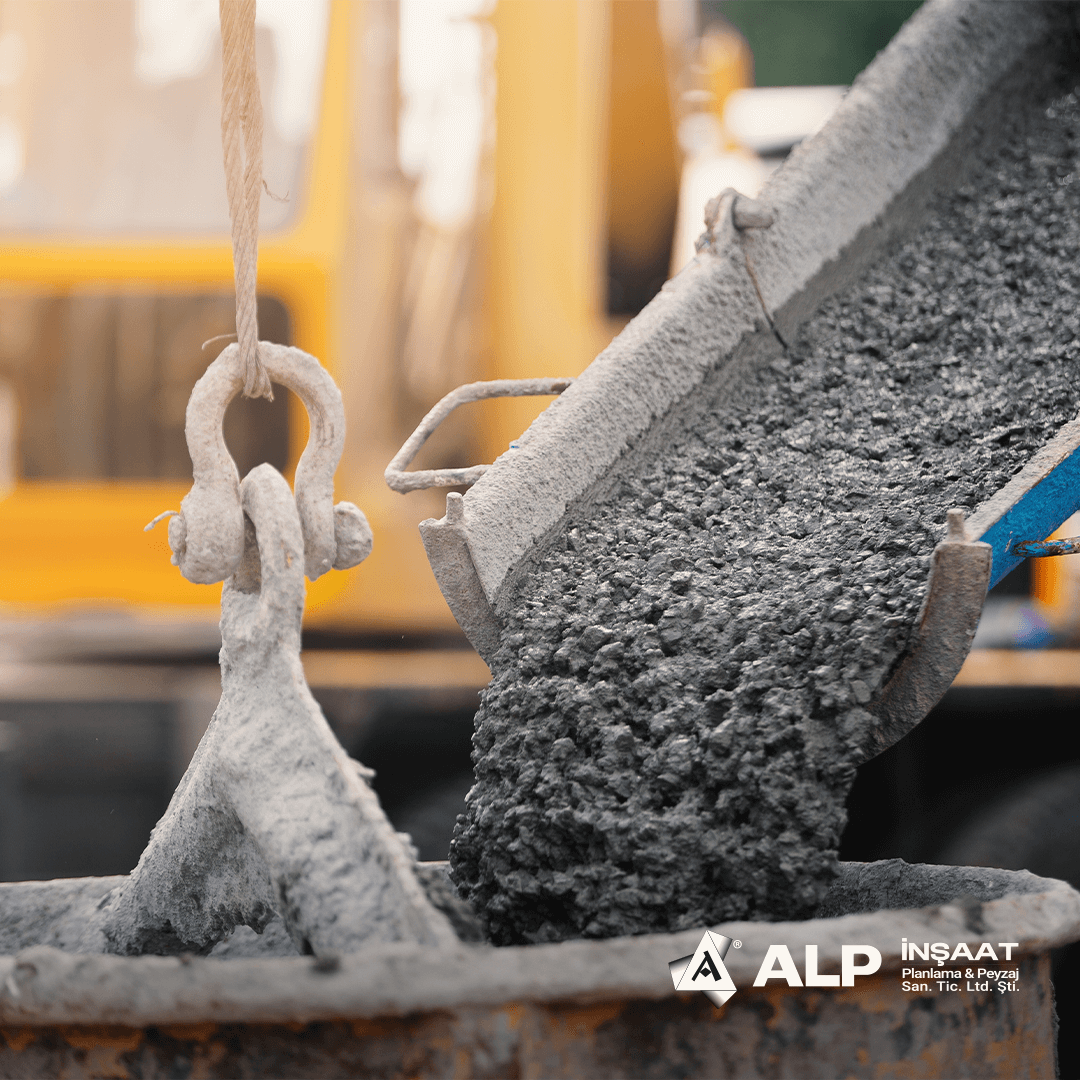
Concrete is one of the indispensable materials of the modern construction industry. Concrete, which forms the basis of reinforced concrete structures, has a wide range of uses due to its durability, flexibility and economy. So, what is concrete and what role does it play in the construction industry? In this article, we discuss in detail what concrete is, how it is produced and how it is used in reinforced concrete structures.
Table of Contents
ToggleWhat is Concrete? What Does Concrete Do?
Concrete is an artificial building material consisting of cement, water, aggregate (sand, gravel, crushed stone) and chemical additives when necessary. Concrete, which is obtained by mixing these materials in certain proportions, hardens over time and turns into a high-strength building material.
The main properties of concrete are:
- High Pressure Resistance: Concrete is highly resistant to compressive forces.
- Being Economical: Concrete is a cheaper and easily available material compared to other building materials.
- Flexibility: Concrete can be easily adapted to different shapes and sizes.
- Fire Resistance: Concrete shows high resistance to fire.
Concrete is used in many structures such as foundations, columns, beams, slabs, roads, bridges and dams in the construction industry. It also forms the basis of reinforced concrete structures and increases the safety and durability of structures.
How to Use Concrete in Reinforced Concrete Structures?
Reinforced concrete is a building system in which concrete and steel reinforcement are used together. Concrete has high compressive strength but low tensile strength. Steel reinforcement, on the other hand, shows high resistance to tensile forces. The combination of these two materials enables structures to withstand both compressive and tensile forces.
The usage areas of concrete in reinforced concrete structures are as follows:
- Foundations Concrete is used in foundations that transfer the load of the structure to the ground.
- Columns and Beams: Concrete and reinforcement are used together in the columns and beams that form the structural system of the building.
- Upholstery Concrete is used for load bearing slabs between floors.
- Curtain Walls Shear walls that provide resistance against earthquake loads are built in reinforced concrete.
Reinforced concrete structures are of great importance for the safety of structures, especially in earthquake zones.
How is Concrete Produced?
Concrete production is realized by mixing cement, water, aggregate and chemical additives in certain proportions. The concrete production process consists of the following steps:
- Material Selection: The most important factor determining the quality of concrete is the quality of the materials used. Cement, water, aggregate and additives must comply with the standards.
- Mixture Ratios: The strength and workability of concrete depends on the mixing proportions of the materials. These proportions are determined according to the needs of the project.
- Mixing: The materials are mixed in concrete batching plants or on site to obtain a homogeneous concrete.
- Transportation: The prepared concrete is transported to the construction site by transit mixers.
- Placement: The concrete is poured into molds and compacted with vibrators to remove air pockets.
- Cure: Suitable conditions are provided for the concrete to harden. It is important to keep the concrete moist during this process.
Things to Consider When Pouring Concrete
Concrete pouring is a critical process for the durability of the structure. Some important points to be considered in this process are as follows:
- Mold Control: Before pouring concrete, the molds must be checked to ensure that they are sound and watertight.
- Weather Conditions: Concrete should not be poured in extremely hot or cold weather. Pouring should be done under suitable weather conditions.
- Vibrator Use: When pouring concrete, compaction should be done with vibrators and air gaps should be removed.
- Casting Speed: The concrete should be poured quickly and continuously and placed in layers.
- Surface Smoothness: The concrete surface should be leveled with a screed or trowel.
When to Water Concrete?
Curing of concrete is of great importance in terms of gaining strength. Curing prevents the formation of cracks by keeping the concrete moist. Watering and curing of concrete is done as follows:
- The First 24 Hours: The first 24 hours after pouring concrete is a critical period for curing. The concrete surface should be kept wet during this period.
- For 7 Days: The concrete should be watered regularly for 7 days after casting. This ensures that the concrete gains sufficient strength.
- Curing Methods: Concrete can be cured by water spraying, wet sack covering or using chemical curing agents.
Proper curing ensures long life and durability of concrete.
Conclusion
Concrete is one of the cornerstones of the modern construction industry. The safety and durability of reinforced concrete structures depend on the correct use of concrete. As ALP Construction, we attach great importance to the use of concrete in accordance with the standards in every project and offer reliable structures to our customers. You can contact us to get support for your projects.

